

We’re exploring gamification at AlphaFirst
This started with a simple question inside AlphaFirst: could the same things that make games satisfying also help people notice meaningful progress at work?
By gamification, I don’t mean turning work into a gimmick, or pretending that every job should feel like a game. I mean something simpler: making progress more visible.
Most people like to know they are moving forward. That might mean completing a task, improving a skill, building a habit, helping a colleague, or doing something consistently over time. Games are good at showing that progress clearly. Work doesn’t always do that.
That’s the part we’re interested in.
Why this caught our attention
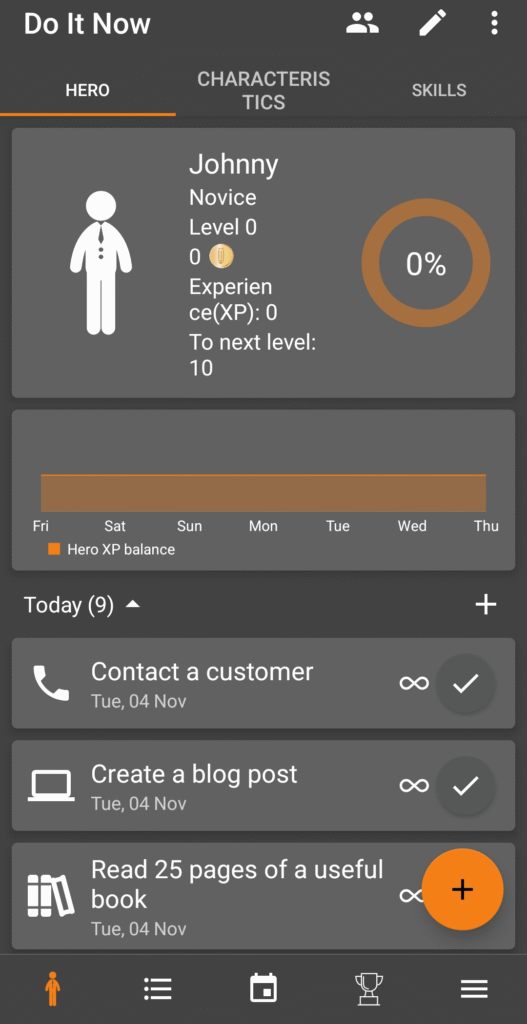
One of the ideas we have been looking at is the Android app Do It Now: RPG To Do List. It lets people set tasks, complete them, and earn progress against different personal traits.
Used personally, that is interesting enough. But it raises a bigger question for a business:
Could a similar idea help people see meaningful progress at work?
For example, a business looking at team management software might want to recognise:
- completing important daily tasks
- learning something new
- helping another team member
- improving a process
- following up on something that gets missed
- building healthier work habits
- contributing ideas or feedback
The point is not to bolt game mechanics onto work for the sake of it. Done properly, it could make meaningful progress easier to see and easier to build on.
What it might help with
We can see a few possible benefits.
It could help with things like:
- helping staff notice progress that would otherwise be invisible, because not every worthwhile action shows up in a sales figure, invoice or support ticket
- helping managers see patterns without having to chase people, because clearly tracked tasks, habits or responsibilities make it easier to spot where things are working and where support may be needed
- helping people take more ownership of their own development, instead of waiting for a formal review to see what they are building over time
That said, this only works if the system rewards the right things. Measuring the wrong behaviour can make a business worse, not better.
What we are cautious about
Gamification can go wrong.
It can go wrong if:
- it becomes too focused on points, badges or leaderboards
- it encourages people to chase the score instead of doing the right thing
- it feels forced
There is also a balance between encouragement and surveillance. A good system should help people see progress. It should not make them feel watched every minute of the day.
That’s why we’re still in the research stage.
What we are building
We’re in the early stages of exploring an app for our own use at AlphaFirst. The idea is to test whether gamification can support better habits, clearer progress and better feedback inside a small business.
If it works for us, it may also become something we can offer to customers in future.
At this stage, we’re mainly looking for ideas, reactions and practical feedback.
Would you like to help shape this?
If this idea interests you, we would be happy to hear from you.
There’s no cost involved at this stage. We’re looking for people who are open to discussing how this might work in a real business, what would help, and what would put them off.
If you would like to be involved, please get in touch.